Arbitration in Singapur, assets frozen in Mexico: what Mexico’s Supreme Court upheld (AR 557/2025)

A widely held assumption among companies with international operations is that agreeing to arbitration abroad “removes” the dispute from Mexican courts. A case recently decided by Mexico’s Supreme Court of Justice (the Court) shows that this assumption is incomplete and that the cost of not understanding it can be measured in frozen bank accounts. Two […]
Mexico’s Financial Intelligence Unit can freeze your trust without a court order. Your trustee is not liable for that

Many individuals and companies in Mexico use management trusts to protect assets and isolate risks. The rationale is straightforward: assets are transferred to a trustee institution and are placed outside the reach of creditors and corporate disputes. However, they are not outside the reach of the Financial Intelligence Unit (UIF). The Supreme Court of Justice […]
When Your Debtor Enters Commercial Insolvency Proceedings, the Clock Is Already Ticking

You are the administrator of a company that regularly extends credit. You document those receivables through promissory notes, invoices, and contracts. One of your clients has failed to pay you for several months, and one day you see in Mexico’s Federal Official Gazette (DOF) that it has initiated commercial insolvency proceedings. From that moment on, […]
The promissory note that looked bulletproof: what a recent Mexican Supreme Court of Justice decision means for your company

If you operate in Mexico or extend credit to Mexican counterparties, you will likely rely on promissory notes (pagarés). I see this structure used routinely in commercial practice. A recent decision from the Mexican Supreme Court changes how reliable those instruments are in litigation. A company filed a summary commercial action to collect on six […]
SA, SRL or SAPI? What your corporate structure defines before the investor arrives

When an investor appears on the horizon, most growing companies in Mexico face the same situation: they have been operating for years under a corporate structure that nobody reviewed since incorporation. What seemed like an administrative decision turns out to determine who can call a shareholders’ meeting, how shares are transferred, and what real protection […]
Merger Risk Management: The Role of Creditor Opposition

Recently, the Supreme Court of Justice of Mexico, upheld the right of creditors of companies seeking to merge to judicially oppose the process and to have the merger suspended until the opposition is resolved. The Court confirmed the constitutionality of Article 224 of the General Business Company Law (LGSM). However, the primary lesson this ruling […]
Your Shareholders’ Meeting May Be Annulled—And You Probably Don’t Know I

This is not an exaggeration, and it happens in practice more often than one might expect. All legal requirements may appear to have been met, yet someone failed to review the bylaws before issuing the call notice and was unaware of the latest applicable judicial criteria. A poorly drafted call notice or one published incorrectly […]
When Mexico’s Financial Intelligence Unit Freezes Accounts, There Is No Backup: What Directors Must Know Before It Happens

On April 6 of this year, the Supreme Court of Justice of Mexico upheld that the Financial Intelligence Unit (UIF) may freeze a company’s bank accounts without requiring a prior court order. It is sufficient for the authority to determine, based on reasonable indicia, that the company may be linked to offenses such as terrorist […]
Your Mexican Subsidiary’s Bank Accounts Can Be Frozen Overnight. The Injunction Route Is Closed.

Your bank can freeze your account funds if it suspects that the security token provided to you has been misused, and a legal injunction can no longer be used to release them—provided this freeze is stipulated in your contract. Indeed, Article 52 of the Financial Institutions Law (LIC) grants banks the ability to agree with […]
New Judicial Decision in Mexico Forces Airlines to Reassess Check-In Protocols

The airline’s online check-in system fails. The passenger is unable to obtain their boarding pass. The passenger arrives at the airport two hours in advance instead of three, as required for international flights. The flight closes. Who should bear the consequences of such a situation: the airline or the passenger? The incident occurred in Mexico. […]
Closing the Gap: How to Avoid Costly Litigation in High-Stake Credit.
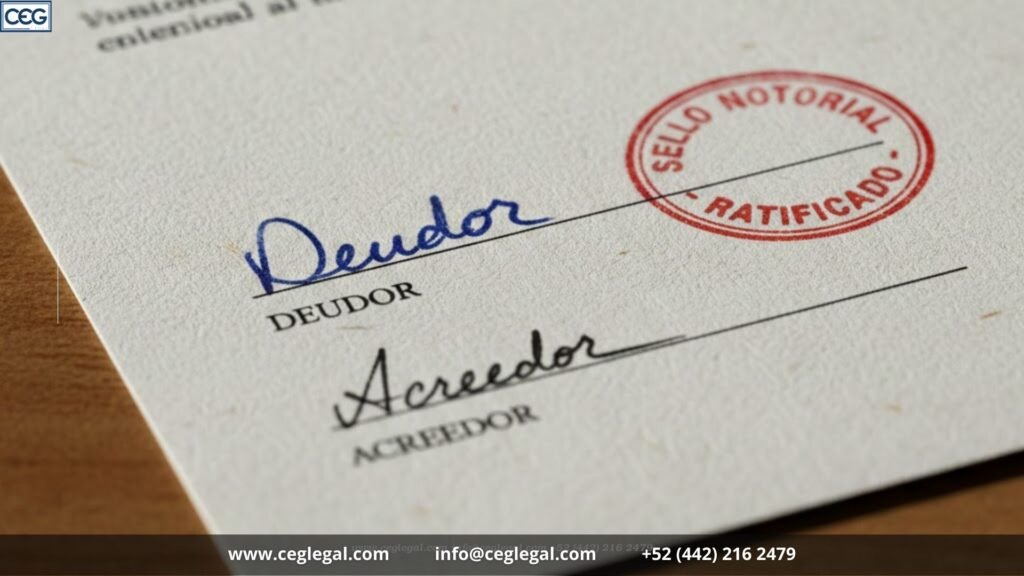
Some companies granting high-value credit rely on the fact that, by being secured through non-possessory pledges or guaranty trusts, they will face fewer difficulties in recovering their investment in the event of a debtor’s default. On the other hand, if the formal requirements mandated by law to establish such collateral are not met, creditors may […]
Cross-Border Contractual Shielding: Why foreign law does not secure immunity in Mexico.

Some companies with cross-border businesses still assume that by choosing foreign laws to govern agreements that have effects in Mexico, they will obtain greater legal certainty. This is because they assume that a Mexican judge will apply the agreement literally when the validity or scope of any of its clauses is challenged. However, that assumption […]