

A widely held assumption among companies with international operations is that agreeing to arbitration abroad “removes” the dispute from Mexican courts. A case recently decided by Mexico’s Supreme Court of Justice (the Court) shows that this assumption is incomplete and that the cost of not understanding it can be measured in frozen bank accounts.
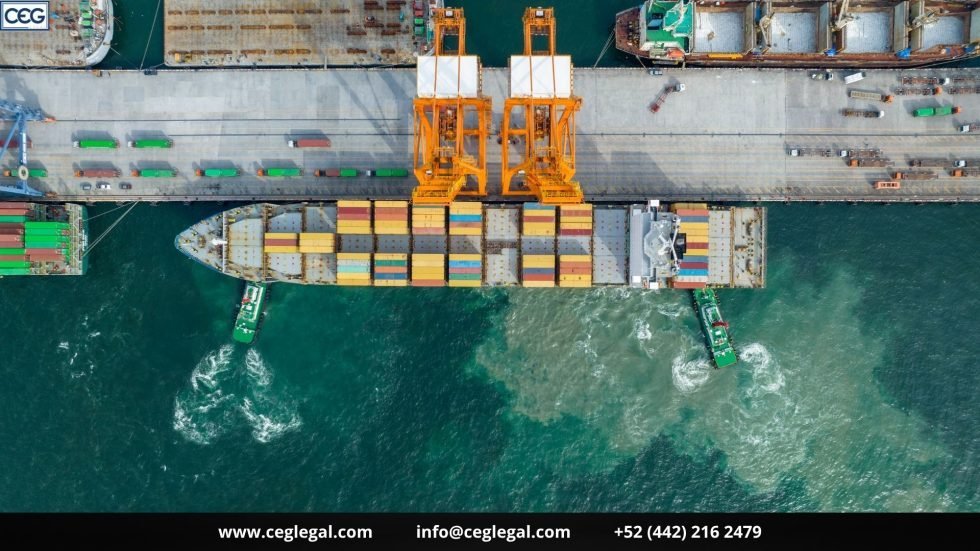
Two companies entered into a contract involving a vessel and agreed to resolve disputes before an arbitral panel in Singapore. When one party failed to make payment, the other initiated arbitration and, in parallel, appeared before a Mexican judge, who ordered the seizure of the vessel and the freezing of the defaulting party’s bank accounts. The merits of the case would be decided in Asia; the assets were immobilized in Mexico as soon as the judge so ordered.
The affected company challenged the constitutionality of Article 1,478 of the Commercial Code, which grants judges discretion to adopt provisional remedies, even in the presence of an arbitration agreement. The Court denied the constitutional trial (amparo) and upheld the validity of the provision. The rationale behind the wording of the article is that the origin of such provisional remedies may vary widely, and limiting the cases in which they may be granted would reduce their effectiveness. The judge must provide legal grounds and reasoning for each provisional remedy when issuing it, but the authority itself is not in question.
The practical conclusion is simpler than the case file: an arbitration clause determines who resolves the merits of the case. It does not determine anything regarding the location of the assets, and assets are reached where they are located, before a Mexican judge.
If your company sells to foreign clients or purchases foreign suppliers, it is likely that a clause of this type is already included in your contracts with them. In many cases, it was drafted by the counterparty, with the seat of arbitration of its choosing. While that arbitration proceeds in the agreed venue, your bank accounts in Mexico may be frozen from one day to the next.
The issue does not arise at the moment the judge orders the provisional remedy. It arises earlier, when structuring the transaction.
Is the company that signed the contract the same entity that holds the operating bank accounts in Mexico? When a dispute is resolved abroad, what could a Mexican judge find under the name of the entity that assumed the arbitration clause?
And if you are acquiring a company, have you reviewed the target’s existing contracts subject to international arbitration clauses? Have you agreed with the seller on how that contingency will be handled post-closing?
An arbitration clause is agreed on the last page of the contract, sometimes as an afterthought after focusing on other provisions. It is also there where what may happen to your accounts and assets in Mexico is effectively decided.
Constitutional Trial (Amparo in Review 557/2025), decided by Mexico’s Supreme Court of Justice, sitting en banc, on June 10, 2026.